FSSAI Enforcement Is Tightening. Is Your Packaging Process Ready?





Food packaging regulations in India aren't changing overnight, but the way they're being enforced is.
Recent FSSAI actions, from questioning on-pack marketing claims to introducing standardized requirements and issuing ongoing advisories and labeling updates, point to a clear shift in regulatory expectations. The focus is no longer limited to food safety alone. Increasingly, what's printed on the package itself is becoming a key area of regulatory scrutiny.
For food brands, this means compliance can no longer be treated as a final checkpoint before a product goes to print. Every regulatory update or enforcement action can affect packaging that’s already in the market, requiring teams to review, update, approve, and track changes across multiple products and SKUs.
In this blog, we'll look at the enforcement trends driving this shift, the challenges they create for packaging teams, and how brands can stay prepared as regulatory expectations continue to evolve.
FSSAI's attention used to sit mostly with manufacturing inspections and food safety audits. That's no longer where it stops.
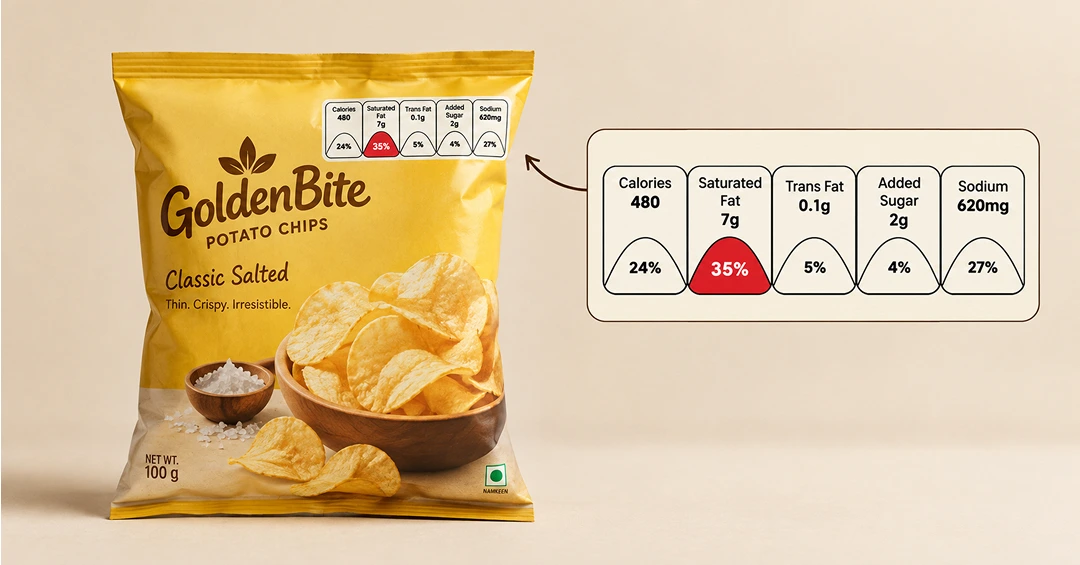
Increasingly, the scrutiny lands directly on the pack: front-of-pack claims, product descriptors, logos, mandatory declarations, label accuracy, and the documentation behind all of it.
Recent notices over marketing claims, action around misleading labels, the rollout of the vegan logo requirement, and a steady stream of advisories and amendments all point the same way. This isn't a single crackdown. It's a pattern of more active oversight over what packaging communicates to consumers.
For brands, that means the label isn't just a design output anymore. It's a compliance surface, one that regulators are actively watching.
Understanding a regulatory update is rarely the hardest part. Implementing it across every affected artwork is.
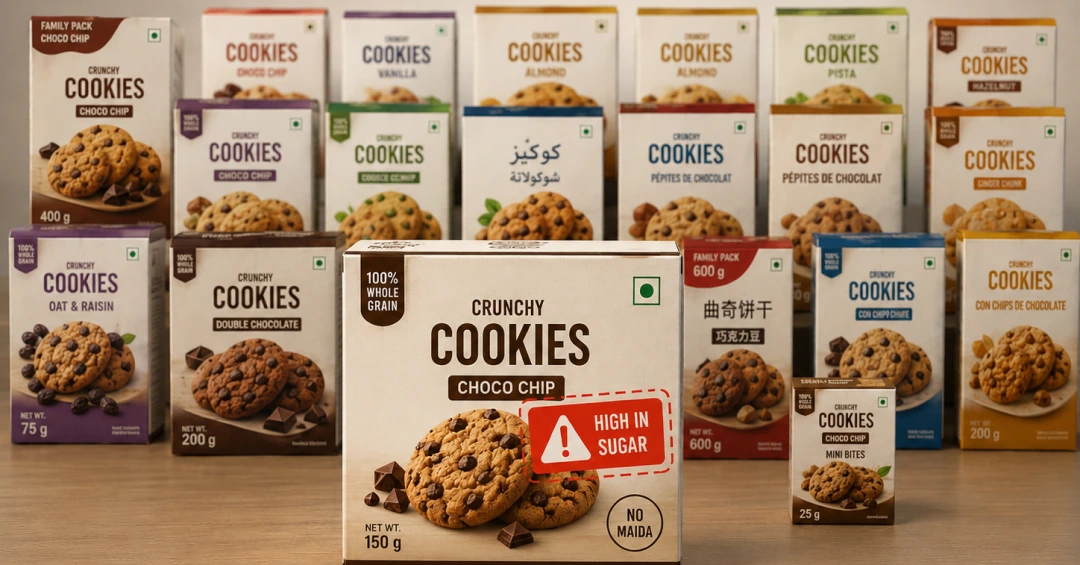
Say FSSAI raises a concern about a claim already printed on pack. Responding to that isn't a single design edit. A team has to find every SKU, variant, pack size, language, and market carrying that claim. Understand how and when it was originally approved. Check whether affected stock is still in production or already on shelves. Coordinate the fix across Regulatory, QA, Legal, Marketing, design agencies, and print vendors. And make sure every outdated version is actually pulled from circulation, not just the one someone remembered to flag.
Many brands still manage their artwork management process through spreadsheets, email approvals, shared folders, and manual version tracking. When information is fragmented, even basic questions become difficult to answer. Which products are affected? Which artwork is the latest approved version? Has every instance been updated? Can the approval history be traced if regulators ask for it?
Without centralized visibility and traceability, responding to regulatory scrutiny becomes slower, more manual, and far more prone to error.
Compliance can no longer mean checking artwork against a regulation once, at launch, and moving on. It has to mean continuously assessing, updating, validating, and documenting compliance as the regulation itself keeps shifting.
That takes centralized visibility across every piece of artwork, one single source of truth for what's actually approved, standardized workflows with clear accountability, real version control, automated proofing, full traceability, and the ability to instantly see every SKU, market, or language a regulatory change touches.
As requirements get more granular and more market-specific, manual review alone doesn't scale. AI-powered compliance validation is becoming a second layer of intelligence on top of regulatory expertise. It can flag potential issues early, verify mandatory declarations, check claims against configured rules, identify missing or incorrect information, and automate repetitive validation tasks off a reviewer's plate so they can spend their judgment where it actually matters.
The decision still sits with Regulatory and QA. What changes is how fast and how consistently they can get there.
Bringing all of these capabilities together is where an artwork management platform makes the biggest difference. Rather than managing artwork, approvals, proofing, compliance checks, and asset management across separate systems, ManageArtworks connects the entire packaging lifecycle in one place.
That means when regulations evolve or packaging comes under scrutiny, teams can quickly identify every affected artwork, update copy at scale, validate changes against market-specific requirements with ComplAI, compare revisions through automated proofing, route them through structured approvals, and maintain a complete, traceable record of every decision.
As regulatory expectations continue to evolve, the goal isn't simply to keep up with change. It's to build a packaging process that's ready for it.
Regulatory change isn't new. What's changed is the pace of updates, how visible enforcement has become, and how much FSSAI now expects brands to demonstrate, not just claim.
The brands that stay ahead won't be the ones reacting to every new requirement. They'll be the ones with packaging processes designed to adapt as regulations evolve.
If you're looking to build that kind of process, see how ManageArtworks helps food brands centralize artwork, strengthen compliance, and stay ready for what's next.

FSSAI's focus has expanded beyond manufacturing and food safety audits to what's printed on the pack itself — claims, descriptors, logos, and mandatory declarations.
Because what's printed on packaging has become a compliance surface in its own right, not just a design output. Regulators are watching label accuracy and claims as closely as manufacturing practices.
AI-powered validation acts as a second layer on top of regulatory expertise — flagging potential issues early, verifying mandatory declarations, checking claims against configured rules, and handling repetitive checks so reviewers can focus judgment where it matters most.

.webp)