





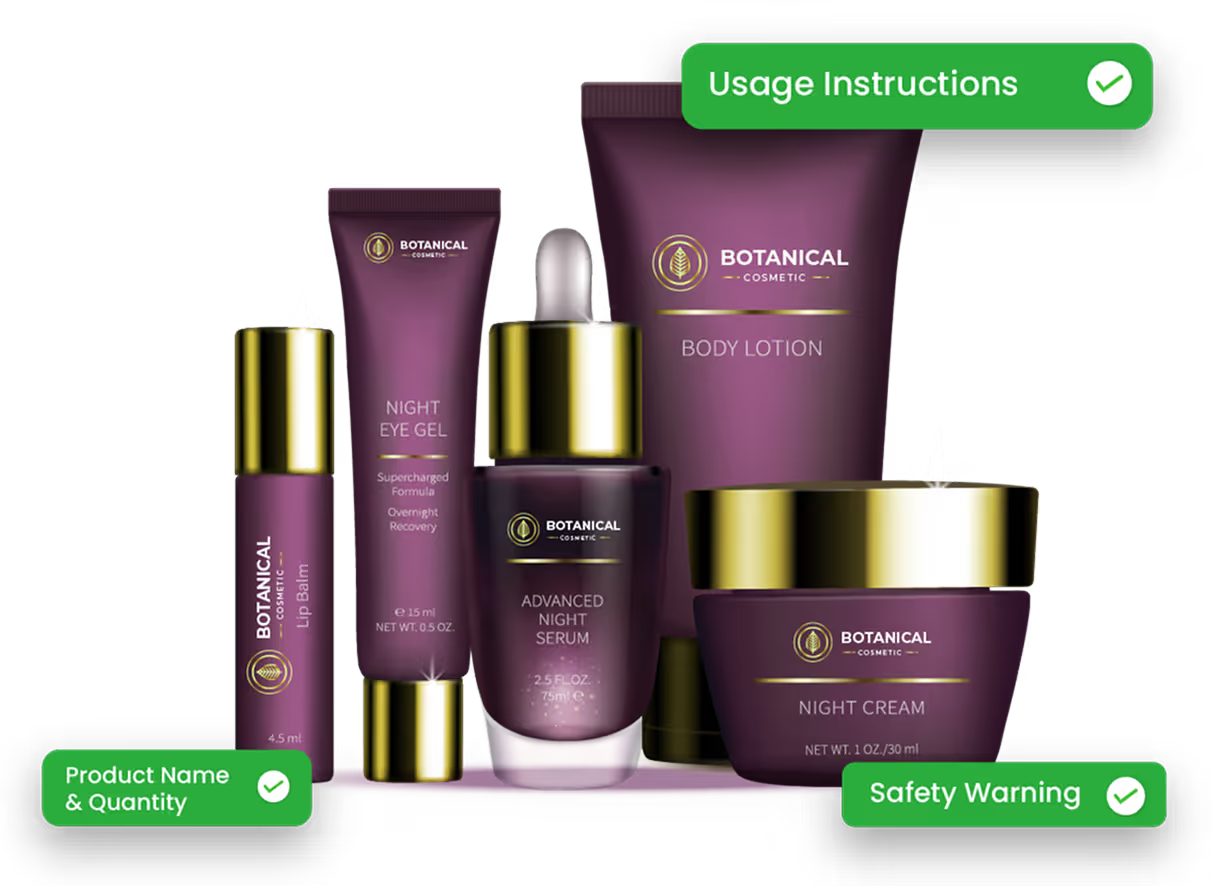
Même les marques de cosmétiques les plus diligentes, quelle que soit leur taille, peuvent être prises au dépourvu par des problèmes de conformité d'étiquetage. Un instant, une équipe célèbre le lancement réussi d'un produit ; l'instant d'après, elle navigue dans les complexités des FDA réglementations et des lettres d'avertissement inattendues
Les rappels coûtant des dizaines de milliers de dollars et des mois de réparation de la réputation, les répercussions sont bien trop nombreuses, mais évitables.
C'est précisément pourquoi cette liste de contrôle existe. L'étiquetage des cosmétiques n'est pas une science infuse, mais un travail précis exige une attention particulière aux détails. Utilisez cette liste de contrôle pour comprendre et respecter les normes d'étiquetage des cosmétiques exigées par la FDA.
Pourquoi les règles d'étiquetage des cosmétiques existent
Réglementation de l'étiquetage des cosmétiques varient considérablement selon l'endroit où les produits sont vendus. Les normes européennes diffèrent des normes américaines. Les marchés asiatiques ont des exigences distinctes. La plupart des entrepreneurs ne réalisent pas qu'il est impossible de créer une étiquette magique qui fonctionne partout. Dans le scénario mondial, chaque marché nécessite sa propre approche.
Prenons l'exemple du marché cosmétique européen. La non-conformité peut entraîner le rejet des produits à la douane, leur blocage des listes en ligne, leur retrait des rayons des magasins, et les exposer à des amendes ou des rappels. Le même produit pourrait ne pas être soumis à des règles aussi strictes aux États-Unis, où la réglementation est comparativement plus souple. Cela est malheureusement évident dans les statistiques, qui indiquent qu'un Américain sur cinq est susceptible de développer un cancer de la peau avant l'âge de 70 ans.
La Union européenne classe les écrans solaires comme des cosmétiques et exige que tous les écrans solaires dans les pays de l'UE fournissent un « facteur de protection UVA d'un tiers du facteur de protection solaire ». Cependant, une analyse de 20 produits montre que près de la moitié des écrans solaires américains ne respectent pas cette norme.

Voici un tableau comparatif UE vs États-Unis :
| Catégorie | UE | États-Unis |
|---|---|---|
| Cadre réglementaire | Règlement cosmétique de l'UE (CE) n° 1223/2009 ; directives du CSSC ; règles harmonisées. | Loi FD&C, FPLA ; surveillance de la FDA ; pas d'approbation préalable à la mise sur le marché ; directives du CIR. |
| Personne Responsable | Obligatoire ; doit être basé dans l'UE. | Pas d'exigence équivalente. |
| Enregistrement des produits | Requis via le CPNP avant le lancement. | Aucun enregistrement obligatoire ; VCRP volontaire. |
| Restrictions d'ingrédients | Listes étendues d'ingrédients interdits/restreints. | Peu d'ingrédients interdits/restreints ; le fabricant assure la sécurité. |
| Tests sur les animaux | Totalement interdit. | Aucune interdiction fédérale ; quelques interdictions au niveau des États. |
| Allégations de produit | Doit satisfaire aux « Critères Communs » ; fondé sur des preuves. | Ne doit pas induire en erreur ; la FDA peut agir en cas d'allégations de type médicamenteux. |
| Nanomatériaux | Une notification à la Commission européenne est requise. | Aucune règle spécifique ; uniquement des directives de la FDA. |
| Exigence de sécurité | Doit être prouvé sûr pour l'utilisation humaine | Justification de la sécurité exigée par MoCRA |
| Évaluation de la sécurité | CPSR obligatoire par un évaluateur qualifié. | Aucun format prédéfini ; le fabricant est responsable. |
| Rappel de produit | Peut être imposé par les autorités. | La FDA peut demander, mais pas l'imposer. |
| Étiquetage | Format strict ; divulgation des allergènes requise. | Strictes mais différentes ; les additifs colorants nécessitent l'approbation de la FDA. |
Facteurs conduisant à un mauvais étiquetage
Face à une concurrence croissante, une demande accrue de nouveaux produits et des tendances émergentes, les entreprises exagèrent souvent les avantages qu'elles ne peuvent pas prouver scientifiquement. Elles dissimulent des informations de sécurité essentielles que personne ne lira. Elles utilisent des noms d'ingrédients déroutants qui ne signifient rien pour les consommateurs réels.
Les dommages financiers d'un tel mauvais étiquetage vont au-delà des sanctions immédiates. Les rappels de produits épuisent les réserves de trésorerie. Les batailles juridiques accaparent des mois d'attention de la direction. La réputation de la marque met des années à se reconstruire après que les scandales d'étiquetage fassent la une de l'actualité du secteur.
Cela dit, examinons les principaux facteurs qui conduisent à un mauvais étiquetage des produits cosmétiques :

Fausses déclarations suggérant des avantages que le produit ne peut pas offrir.
Manquement à révéler des faits essentiels ou l'omission d'avertissements ou de risques cruciaux.
Allégations exagérées ou en surpromettant des résultats sans fondement scientifique.
Non-conformité aux normes réglementaires et en utilisant des termes comme "biologique" sans respecter la définition en vigueur sur le marché.
Manque de clarté sur les instructions d'utilisation ou des instructions d'application ambiguës ou incomplètes.
Unités de mesure manquantes en ne spécifiant pas les grammes, les millilitres ou d'autres unités légales.
Quantité trompeuse en spécifiant 30mI sur l'emballage alors que le produit contient 28ml.
Exigences d'étiquetage des cosmétiques - Votre liste de contrôle complète de conformité de l'étiquetage
La FDA exige plusieurs éléments pour l'étiquetage des produits cosmétiques :
1. Face principale

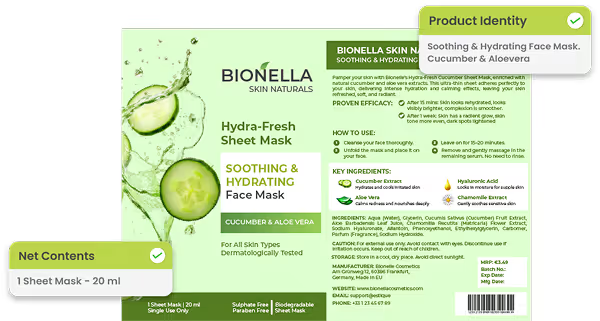
La face avant de votre emballage doit comporter deux éléments essentiels : l'identité du produit et le contenu net.

Incluez deux éléments essentiels sur le panneau principal : l'identité du produit et le contenu net.
Respectez les règles de taille minimale du texte basées sur les dimensions du panneau, mais visez un texte plus grand et plus lisible.
Testez la lisibilité de l'étiquette avec de vrais clients.
Ajustez la taille du texte si des lunettes de lecture sont nécessaires pour identifier le nom du produit.
2. Stratégie de placement de l'information
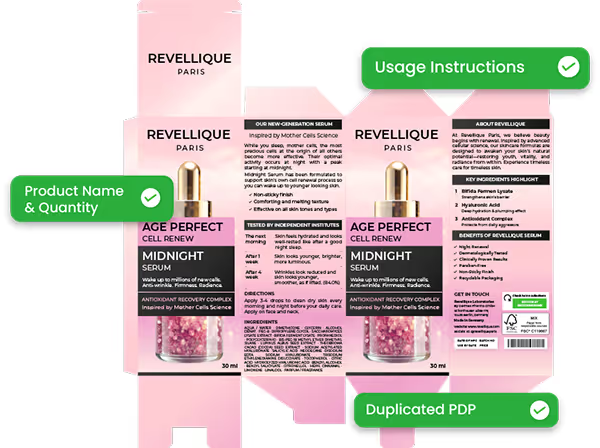
Le nom du produit et la quantité doivent être bien en évidence. Tout le reste peut être placé ailleurs, mais doit rester facile à trouver.
Placez précisément le nom du produit et la quantité.
Si un emballage comporte plusieurs PDP, les informations figurant sur le PDP doivent être dupliquées sur tous les PDP.
Assurez-vous que les instructions d'utilisation sont faciles à trouver, même si elles ne figurent pas sur la face avant.
Concevez la disposition de l'étiquette en fonction des habitudes de lecture naturelles.
Évitez de masquer les détails essentiels dans des zones décoratives ou à faible contraste.
Assurez une taille de police uniforme pour déclarer la quantité nette de contenu d'un produit en utilisant la taille de la surface portant le PDP comme facteur déterminant.
3. Mettre le texte en évidence
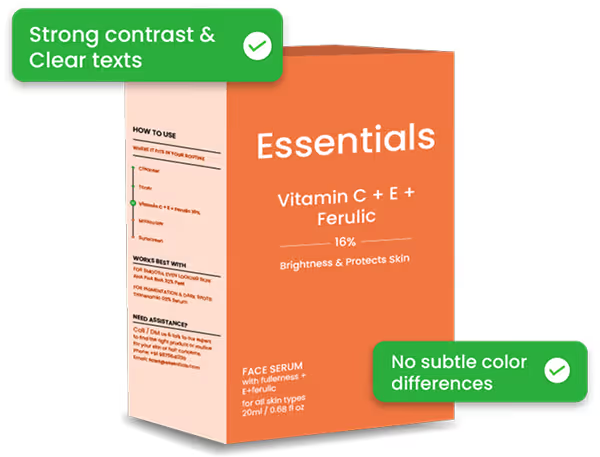
Les informations requises doivent être visibles sur votre fond. Cela signifie un contraste réel, et non des différences subtiles qui rendent bien dans Photoshop mais disparaissent sous l'éclairage des magasins.
Assurez une bonne visibilité sous un éclairage réel.
Testez les étiquettes sous un éclairage fluorescent, et pas seulement dans un logiciel de conception.
Évitez les différences de couleur subtiles qui disparaissent sous l'éclairage des magasins.
4. Exigences linguistiques

L'anglais est obligatoire pour les ventes aux États-Unis, mais vous pouvez ajouter d'autres langues.
Confirmer la conformité linguistique pour chaque marché.
Utilisez des services de traduction professionnels pour les termes réglementaires ; évitez la traduction automatique pour le contenu juridique.
Si l'étiquette contient une langue étrangère, toutes les déclarations requises par la réglementation doivent également figurer sur l'étiquette dans cette langue étrangère.
5. Tailles de texte minimales

Les réglementations fixent des tailles de texte minimales basées sur les dimensions de l'emballage. Ce ne sont pas des suggestions. Les inspecteurs utilisent des outils de mesure et vérifient la conformité lors des visites d'installations.
Respectez les tailles de police minimales légales pour la taille de l'emballage.
Déclarez les ingrédients en caractères d'une hauteur d'au moins 1/16".
Assurez-vous que la taille de la police des avertissements ne soit pas inférieure à 1/16" sauf si une taille plus petite est établie par la réglementation.
Utilisez des polices plus grandes lorsque c'est possible pour améliorer la lisibilité et réduire la responsabilité.
Vérifiez la conformité avec des outils de mesure avant de lancer les tirages de production.
6. Clarté de l'identité du produit
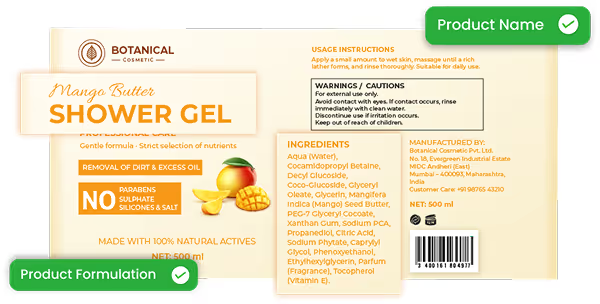
Le nom de votre produit doit communiquer immédiatement ce que les clients achètent.
Utilisez des noms qui décrivent clairement le produit (par exemple, « Sérum visage à la vitamine C »).
Évitez les noms créatifs qui pourraient dérouter les clients ou induire en erreur les régulateurs.
Assurez-vous que l'identité du produit correspond à sa fonction et à sa formulation réelles.
7. Affichage des informations commerciales
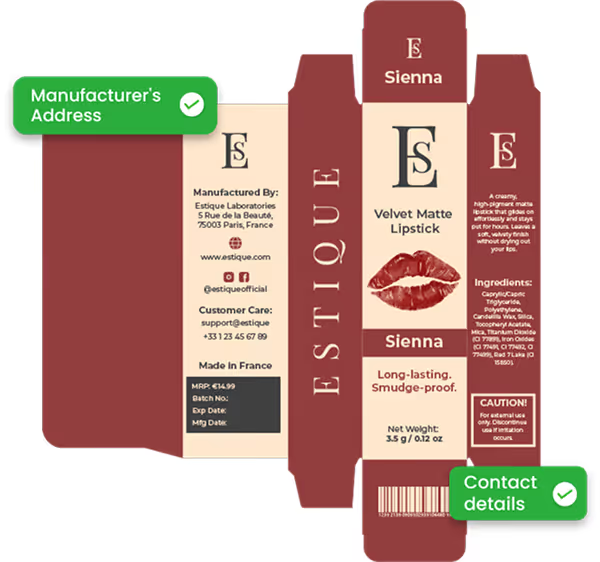
Chaque emballage doit identifier le responsable du produit. Nom, adresse, ville, état, pays. Les clients ont besoin de ces informations pour vous contacter. Les régulateurs en ont besoin pour identifier les problèmes.
Incluez le nom complet, l'adresse, la ville, l'état et le pays du fabricant ou du distributeur.
Utilisez une adresse physique plutôt qu'une simple boîte postale lorsque cela est possible.
Rendez les coordonnées faciles à trouver pour les clients et les régulateurs.
8. Déclarations de quantité précises
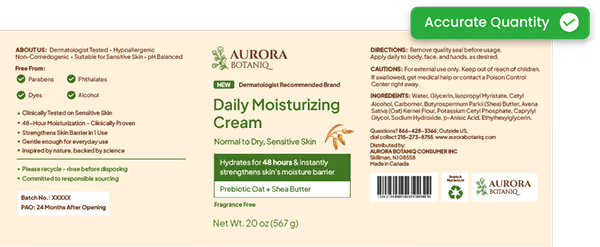
Le contenu net doit correspondre à ce qui se trouve réellement à l'intérieur de votre emballage. Les régulateurs testent des échantillons aléatoires et comparent les quantités déclarées aux mesures réelles.
Déclarez la quantité nette exacte en unités métriques et en unités de mesure américaines, le cas échéant, en termes de poids, de volume, de mesure, de nombre, ou de combinaisons de nombre et de poids, de volume ou de mesure
Intégrez la vérification des quantités aux processus de contrôle qualité.
Utilisez le terme « poids net » conjointement avec une déclaration de poids.
Assurez-vous que le contenu réel correspond aux quantités déclarées ; évitez le sous-remplissage.
9. Exigences en matière d'avertissements de sécurité
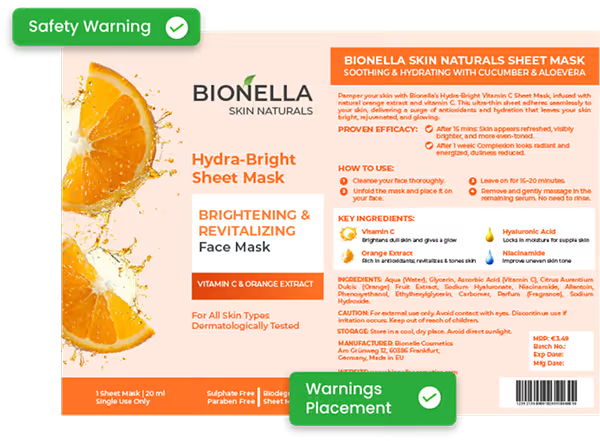
Les avertissements obligatoires utilisent un langage spécifique imposé par la réglementation. Utilisez exactement ce qui est requis, positionné là où les clients le voient avant d'ouvrir le produit.
Utilisez la formulation approuvée par la réglementation pour tous les avertissements requis.
Positionnez les avertissements là où les clients les verront avant d'ouvrir l'emballage.
Évitez de reformuler ou d'atténuer les déclarations de sécurité légalement requises.
10. Précision de la liste des ingrédients
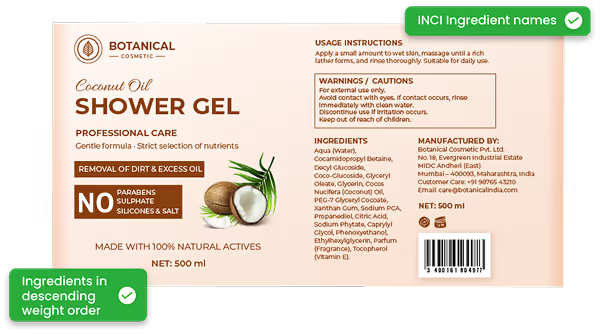
Utilisez les noms INCI ou les noms communs approuvés par la FDA, pas la terminologie marketing.
Listez les ingrédients par ordre décroissant de poids et de prédominance.
Utilisez les noms INCI standardisés ou les noms communs approuvés par la FDA.
Évitez les termes marketing dans la liste des ingrédients.
Assurez l'exactitude pour renforcer la confiance des consommateurs et satisfaire aux contrôles de conformité des détaillants.

Mettre cela en œuvre pour votre entreprise
La conformité de l'étiquetage n'a pas à étouffer la créativité, mais elle exige de la planification. Commencez par les exigences réglementaires, puis concevez votre design en fonction de ces contraintes plutôt que de traiter la conformité comme une considération secondaire.
Travaillez avec des designers qui comprennent les réglementations cosmétiques. Obtenez un avis juridique avant toute impression. Restez informé des changements réglementaires via les associations professionnelles et les communications de la FDA. Investissez dans des outils modernes de gestion d'étiquettes cosmétiques comme ManageArtworks qui automatisent les tâches critiques et garantissent la conformité avec les réglementations en constante évolution.
L'argent dépensé pour un bon l'étiquetage coûte toujours moins cher que de corriger les infractions a posteriori. Plus important encore, les étiquettes conformes protègent vos clients et soutiennent une croissance commerciale durable sur le long terme.