AI is Revolutionizing Compliance - Here's What It Can Do for You





Regulatory and brand compliance across food, pharmaceutical, and cosmetics packaging labels is a high-stakes process. A single error can lead to unnecessary rework, wasted packaging, damaged brand trust, or costly product recalls. However, traditional compliance methods are time-consuming and inefficient.
From brand rules to multi-market regulations, AI enables faster, more consistent validation across products, regions, and languages. This article explores how artificial intelligence is strengthening artwork compliance management, including how tools like ComplAi support automated compliance checks within packaging workflows.
Artwork compliance management ensures that every packaging element—copy, claims, ingredients, layout, symbols, and visual hierarchy—meets regulatory, brand, and market-specific requirements before artwork goes to print.
For growing brands managing multiple SKUs, regions, and regulations, compliance is no longer a final checkpoint. It must be embedded into everyday artwork operations.
Effective artwork compliance management helps organizations:
Adherence to regulations: Regulatory requirements change frequently across regions and categories. A centralized compliance system ensures packaging artwork is validated against current FDA, EU, FSSAI, and market-specific rules, reducing reliance on manual interpretation and memory.
Strengthen competitive position: In highly regulated industries like pharma and CPG, compliance is not just about risk avoidance. Brands that can launch faster, with fewer corrections and delays, gain a clear operational advantage.
Enhanced brand image: Compliance also includes adherence to internal brand rules. Enforcing consistent fonts, colors, icons, and claims across regions helps protect brand integrity while scaling globally.
Improved customer trust: Accurate, compliant labels reinforce professionalism and reliability. Consumers, retailers, and regulators alike favor brands that demonstrate control and accountability in packaging communication.
Reduce risk of recalls and rework: Early artwork validation prevents downstream corrections. By identifying compliance issues during design and review, brands save time, reduce material waste, and avoid last-minute firefighting.
Manual and siloed compliance checks struggle to keep pace with today’s packaging complexity. As product portfolios expand and regulatory scrutiny increases, traditional methods become slower, riskier, and harder to scale.
This is where AI-driven compliance tools like ComplAi move beyond theory into real operational value.
ComplAi is designed specifically for packaging artwork. Rather than acting as a generic AI assistant, it interprets defined regulatory and brand rules and applies them directly to live artwork files during the review process.
With AI embedded into the artwork lifecycle, compliance becomes:
ComplAi compares artwork files against configured brand guidelines including fonts, colors, logos, icons, spacing, and placement rules.
Each element is scanned and validated, returning a clear pass/fail status along with the reason for any non-compliance. This removes subjective interpretation and ensures consistency across teams and regions.
ComplAi automatically extracts text and artwork elements from packaging files and validates them against market-specific regulatory rules.
For example, the same artwork can be checked differently based on whether it is intended for the US, EU, or other regulated markets—without duplicating manual effort.
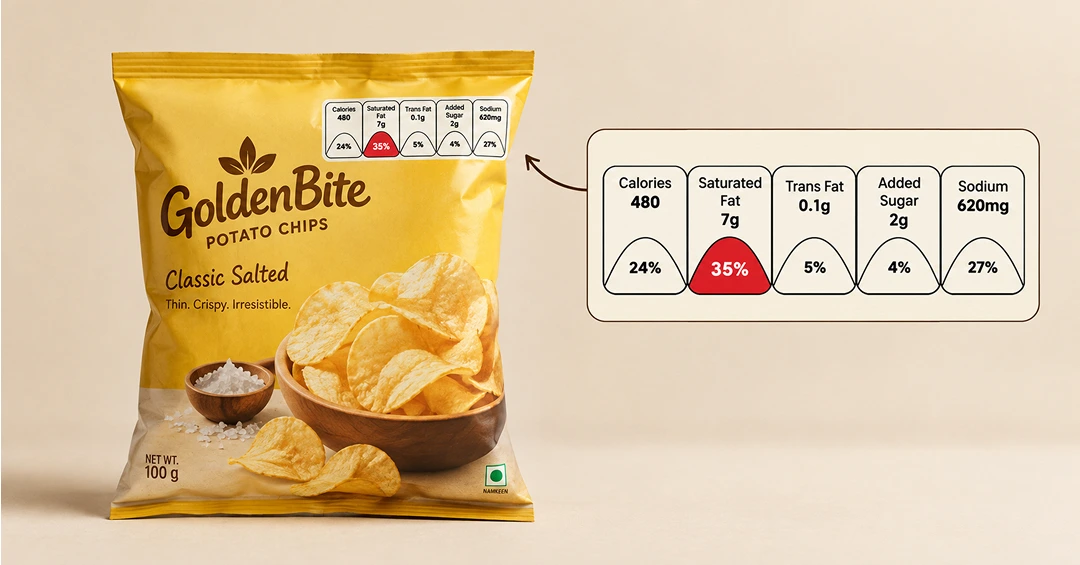
Ingredients, allergens, claims, nutrition panels, warnings, and mandatory statements are automatically identified and categorized. ComplAi then verifies whether each category meets regulatory and brand requirements, reducing the risk of missed or misplaced information.
Rather than simply highlighting issues, ComplAi explains why an element is non-compliant. This enables design, regulatory, and packaging teams to correct issues quickly without repeated back-and-forth.
Ensuring packaging label compliance is challenging for organizations operating in multiple countries. Manual and siloed approaches to artwork compliance are costly, tedious, and highly prone to error.
ComplAi verifies that allergens are clearly and consistently declared across packaging artwork. It identifies allergen-related information within ingredients lists and statements and checks that required declarations are present and correctly referenced.
For example, if milk is present in a product, the system ensures it is explicitly declared wherever required, reducing the risk of omissions and non-compliance.
Every compliance check, change, comment, and approval is logged automatically. Detailed audit trails with timestamps and user actions support internal reviews, regulatory inspections, and quality audits—without additional documentation effort.
As packaging complexity increases, compliance can no longer function as a final checkpoint or a separate review step. It needs to be embedded into the way artwork is created, reviewed, and approved.
ComplAi is built directly into ManageArtworks, bringing AI-driven compliance checks into the core of everyday artwork workflows. Combined with ManageArtworks’ governance controls—such as role-based access, electronic approvals, and full version history—compliance becomes structured, traceable, and consistent without adding operational friction.
Together, these capabilities help teams move from reactive compliance fixes to proactive compliance control, reducing risk, minimizing rework, and enabling faster, more confident packaging releases.

.webp)