Why Clean-Label Claims Are Becoming Harder to Manage





Across food, beverages, wellness, and personal care categories, brands are increasingly positioning themselves around transparency, simpler ingredients, and “better-for-you” choices. Packaging has become the primary way of communicating that promise.
Claims like “No Added Sugar,” “Natural,” “Nothing Artificial,” and “Free From” are now central to how products are marketed and perceived.
But those claims are also attracting a new level of scrutiny.
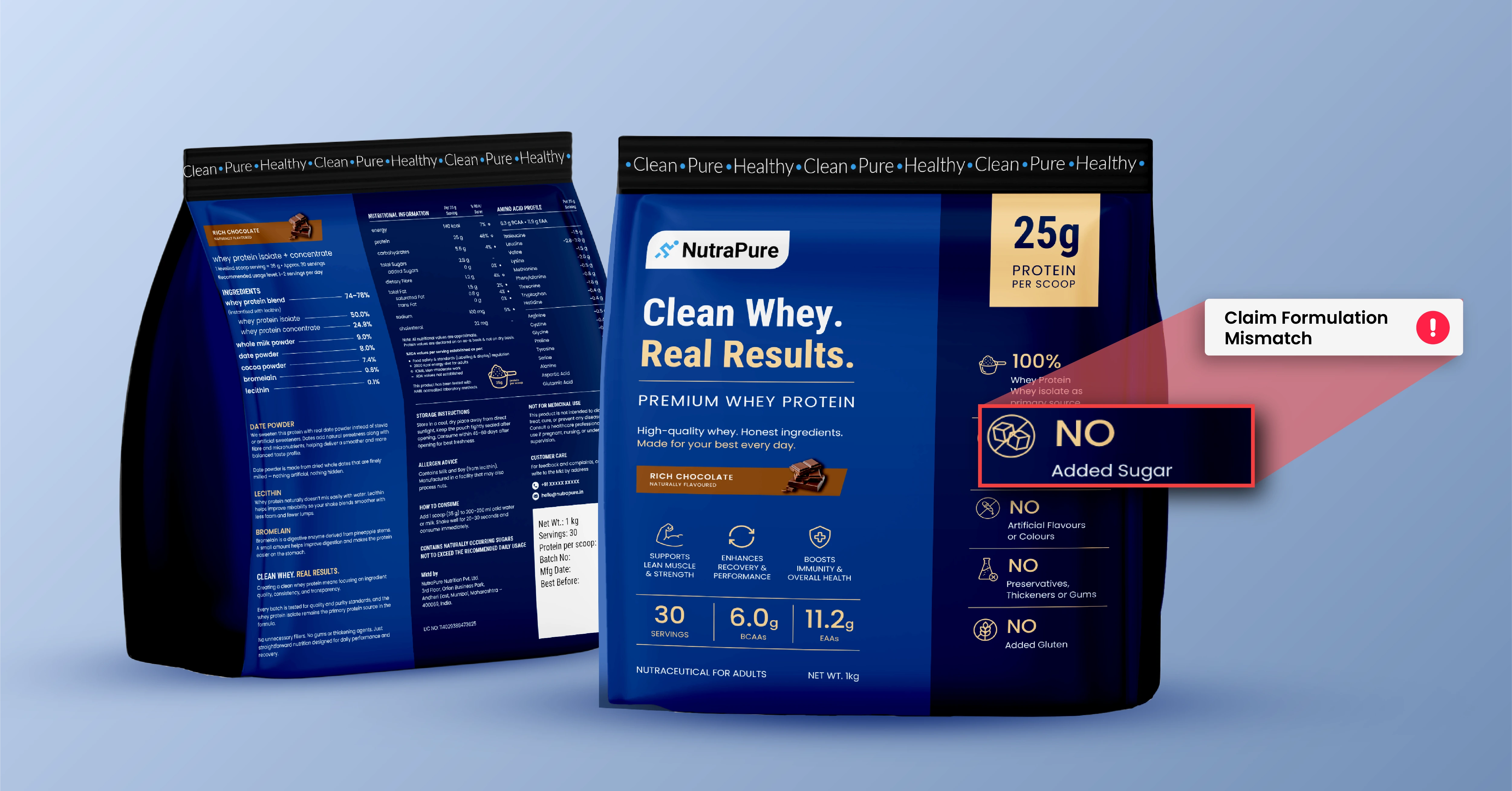
Regulators, watchdogs, nutritionists, influencers, and consumers are now examining packaging language far more closely than they did even a few years ago. The recent scrutiny around The Whole Truth’s “No Added Sugar” messaging highlighted a larger shift: what matters is not just whether a claim is technically defensible, but also how consumers interpret it.
Clean-label packaging, built to communicate simplicity, has quietly become one of the most operationally complex governance challenges in FMCG.
For brands adopting clean-label positioning, scrutiny is increasingly centred around how packaging language is interpreted, not just whether it exists.
“No Added Sugar” and natural sweeteners
This is one of the biggest grey zones in Indian FMCG today.
Many brands use dates, jaggery, fruit concentrates, or coconut sugar instead of refined sugar. But under FSSAI rules, “No Added Sugar” claims may still face scrutiny if sugar-containing ingredients are used as substitutes.
The challenge is often not the ingredient itself, but the consumer impression created by the claim.
“Natural,” “clean,” and “chemical-free” positioning
These terms are now common across FMCG packaging, despite lacking precise regulatory definitions.
That creates risk because different teams and markets may interpret or apply these claims differently unless governance is tightly controlled.
Statements like “Nothing hidden,” “Zero compromise,” or “The cleanest option” build trust quickly but also create a much higher burden of substantiation.
The larger pattern is clear: the stronger the clean-label positioning, the greater the scrutiny around how those claims are communicated and maintained.
When packaging claims face scrutiny, the public conversation usually focuses on the wording itself. Operationally, however, the bigger challenge begins after that.
Because once a claim needs clarification, modification, or removal, brands suddenly need answers very quickly:
Which SKUs carry the claim?
Which packaging formats need updating?
Which regional variants still use older copy?
Who approved the original wording?
This is where clean-label complexity becomes a packaging governance issue.
The more brands position themselves around transparency and clean-label messaging, the more important controlled copy governance becomes.
Formulation-linked claims: If ingredients, suppliers, or nutritional compositions change, the related packaging copy should automatically enter review.
Centralised version control: When claim wording changes, every affected SKU, language variant, and packaging format needs to be updated consistently.
Market-specific governance: Claims acceptable in one market may require changes in another, making manual management increasingly difficult.
Structured approvals and audit trails: Brands need clear approval histories showing what claim was used, who reviewed it, and what formulation supported it.
Managing clean-label packaging at scale requires treating packaging copy as structured, governed data — not as text buried inside design files.
It means creating a single source of truth for claims across products, markets, and packaging formats, with controlled workflows connecting regulatory, R&D, marketing, and design teams.
This is exactly what ManageArtworks’ Copy Manager is built to support.
By centralising packaging copy with structured workflows, element-level approvals, version control, and traceable review histories, brands can manage clean-label claims more consistently across increasingly complex packaging operations.
Because the brands most exposed today are often not the ones making intentionally false claims, but the ones unable to consistently govern, validate, or update claims at scale.

Consumers and regulators now closely examine how packaging claims are interpreted, not just how they are written.
Claims often need consistent updates across multiple SKUs, regions, packaging formats, and language variants.
Centralised packaging copy systems improve consistency by keeping claim approvals, updates, and reviews fully traceable.

.webp)