Why Cosmetic labeling is harder than Pharma

Why Cosmetic labeling is harder than Pharma

Unlike pharma labels, cosmetic labels don’t have hard-and-fast rules that must be followed. There are guidelines, regional regulations, and general principles, but rarely a single “right” way to structure a label.

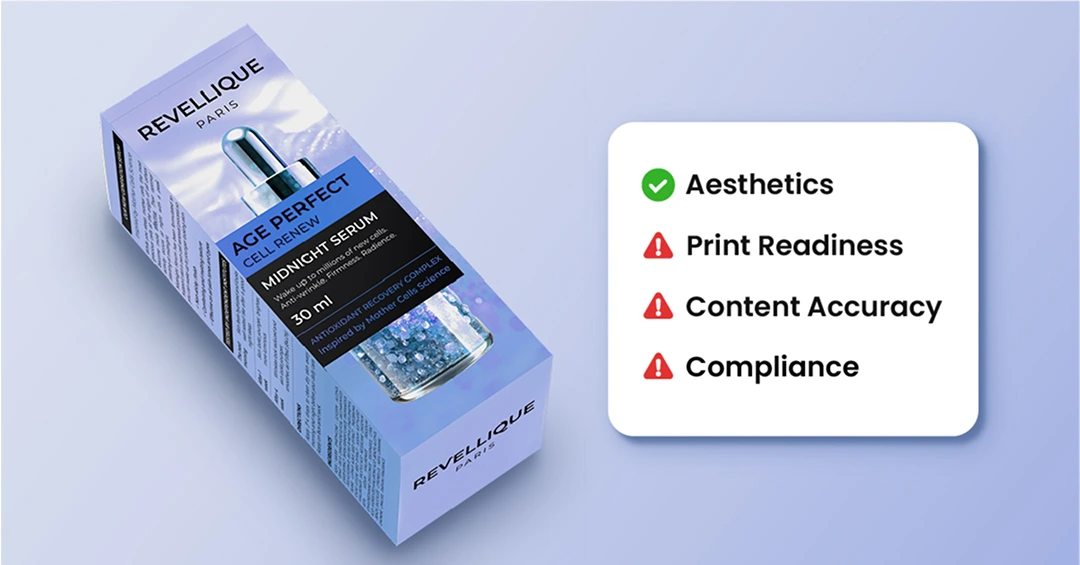
Cosmetic packaging also carries an additional expectation that pharmaceutical labels usually do not: it must work visually as well as regulatory-wise. Claims, ingredient information, warnings, and usage instructions must fit within a design that reflects the brand while still appealing to consumers.

Because of this, labeling decisions are rarely made by one team alone. Regulatory, R&D, design, and marketing often contribute to how the final label takes shape. R&D may focus on scientific accuracy, regulatory teams on compliance, while marketing considers how the packaging aligns with brand positioning or current market trends.

When strict rules are replaced by broader guidelines, and when labeling also needs to support brand presentation, the burden of interpretation falls on the teams reviewing the artwork. Instead of a single clear answer, discussions often revolve around what wording, layout, or presentation is acceptable.

This rarely shows up as a compliance issue. More often, it appears as repeated reviews, multiple artwork versions, and longer discussions around claims, wording, or presentation during the labeling process.

Where ambiguity enters the labeling process

Ambiguity usually enters the labeling process gradually at different stages of the packaging workflow.

  • Initial claim development
    Marketing proposes product claims and positioning, which regulatory teams review against available guidelines. Because the rules allow interpretation, the discussion often focuses on what is acceptable rather than what is strictly required.
  • Artwork updates or redesigns
    When packaging is refreshed for a new variant, format change, or design update, previously approved wording may return to discussion even if the text itself hasn’t changed.
  • Market expansion or localisation
    A claim that works in one market may be interpreted differently in another. Teams often revisit earlier decisions while adapting packaging for regional requirements.
  • Portfolio extensions
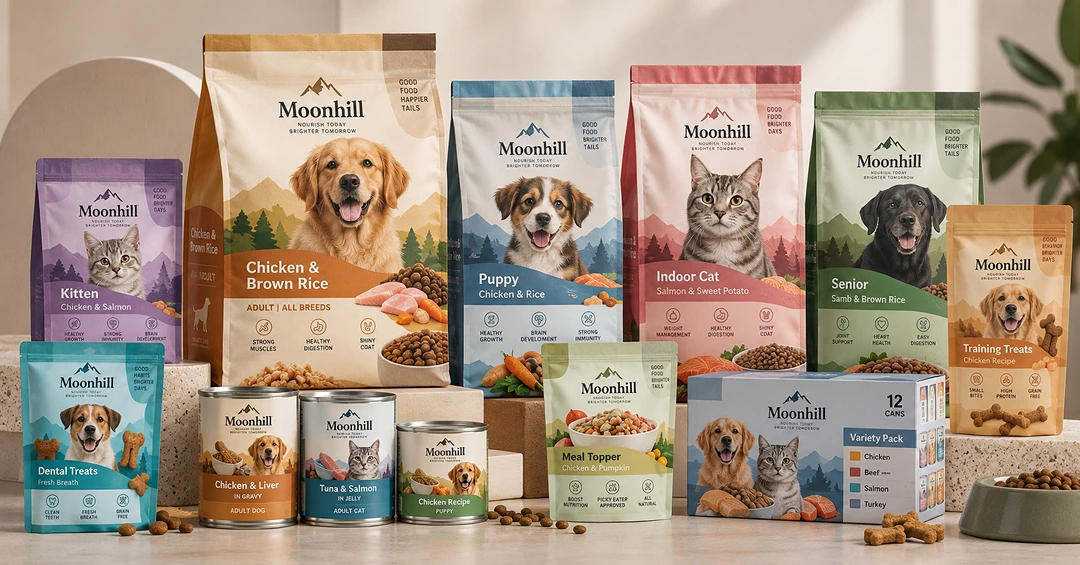
    As new products are added to a range, teams look back at earlier packs to maintain consistency across the portfolio.

How teams manage this today

In many organizations, teams rely on a combination of experience and informal references to navigate these situations. Previous packaging files are reviewed, earlier approvals are searched in email threads, and colleagues who participated in earlier reviews are consulted.

For example, a team may revisit an older pack to see how a claim like “dermatologically tested” was previously presented, whether any clarifying wording was added, or how similar wording was handled on another product in the same range. Teams often compare multiple past artwork versions to see how a claim evolved, and when the reasoning isn’t obvious, they end up digging through old artwork files or long email threads to piece the decision together.

This approach can work in smaller portfolios or stable teams where people remember earlier decisions. But as product lines expand and more markets become involved, relying on scattered documentation and institutional memory becomes harder.  

What’s often missing in the process

The missing piece is not regulation knowledge but visibility into earlier decisions.

When the reasoning behind labeling choices exists only in email threads, or individual memory, that knowledge becomes difficult to reuse in future reviews.

Teams often struggle to quickly answer questions such as:

  • Why was this claim or wording approved earlier?
  • What changed between the previous artwork and the current version?
  • Which reviewer comments were already addressed?
  • How should earlier decisions apply to a new variant or market?

Without that context, teams end up revisiting questions that were already discussed. Even routine packaging updates can take longer simply because the earlier decision history isn’t easy to reference.

How artwork management systems change this process

Instead of relying on email threads or institutional memory, teams can work within a structured system that brings together artwork files, review conversations, and approval history.

This typically includes capabilities such as:

  • Digital Asset Management (DAM)
    A centralized system in which files associated with the artwork such as packaging designs, layout files and other documents, can be stored in an organized and searchable format. This enables teams to quickly access the correct packaging version without searching through folders or email attachments.
  • Workflow management
    Clear stages of review ensure that the artwork is being reviewed in the right way. Marketing, regulatory, and design teams can collaborate within the same workflow, reducing fragmented discussions across multiple tools.
  • Online proofing and annotation
    Reviewers can comment directly on artwork files, making feedback visible in context. This enables teams to clearly see which comments have been addressed and which still require attention.
  • Version control
    Each artwork revision is stored with a clear comparison against previous versions. This allows reviewers to focus only on what has changed instead of re-evaluating the entire label during every update.
  • Audit trail and approval history
    A structured record of comments, approvals, and decisions remains attached to the artwork. This history becomes a reliable reference when teams revisit packaging during redesigns, localization, or portfolio extensions.

Together, these capabilities allow labeling decisions to remain visible and traceable across packaging updates. Instead of reconstructing earlier discussions, teams can rely on a connected record of how labeling choices were reviewed and approved.

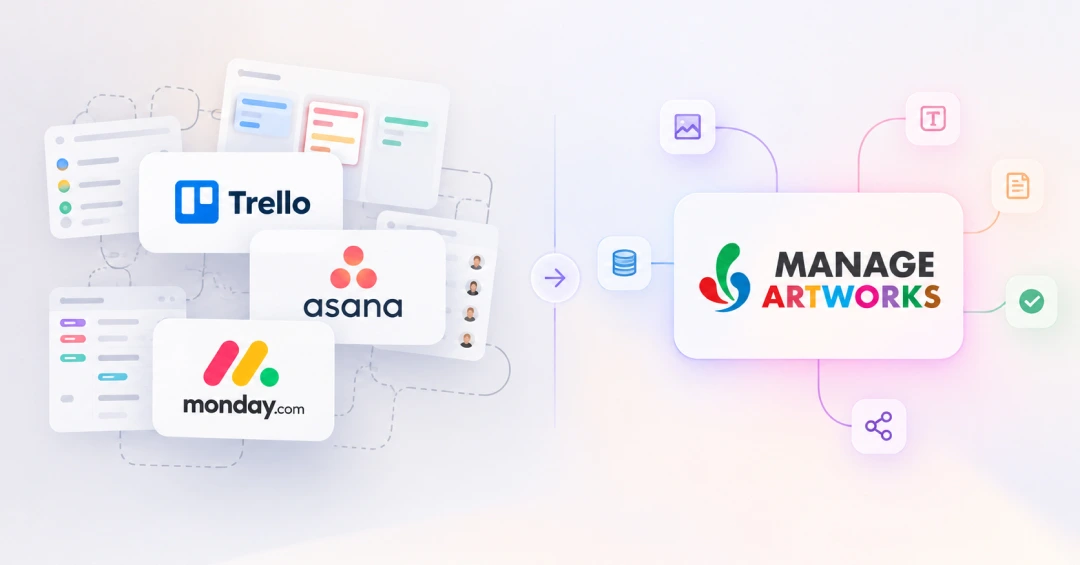
ManageArtworks brings these capabilities together in a single artwork management platform, helping cosmetic teams review packaging updates with greater clarity, continuity, and confidence.

Recent Blogs

Prêt à découvrir comment ManageArtworks fonctionne ?
Cela pourrait fonctionner pour vous ?

Correct
Gratuit pendant 14 jours
Correct
Aucun détail de carte n'est requis

Hear what Our Customers say

Cedar's company logo with an image of a green cedar tree.
We wanted to streamline our label approval process with a functional program that could help us avoid human error, consolidate information, store assets, and provide timelines. ManageArtworks met all of these needs and is extremely user friendly, so our adoption to the software was seamless. The customer service and customization far exceed expectations.
Icon of a stylized helmet with face guard in turquoise and the word HEALTH next to it.
The system's efficiency in handling artwork submissions, revisions, and approvals has not only saved us valuable time but has also enhanced collaboration among team members. Its automated notification feature has greatly reduced communication gaps and improved overall project coordination. the Artwork Management System has been a game-changer for us. Its reliability, ease of use, and comprehensive capabilities make it an indispensable tool for anyone dealing with artwork management.
Borosil brand logo
ManageArtworks has significantly improved our workflows and artwork development process. The tool makes it easy to initiate new projects and set up timelines for artwork development. The ability to store all relevant information in one central location has been a game-changer as it allows us team members to collaborate and communicate seamlessly. Special thanks to the customer support team for their responsiveness and meaningful support.
Chegg logo featuring a stylized open book with blue and green pages and an orange bookmark.
ManageArtworks is an excellent product to work on with. With this tool, our artwork development timelines are coming down and efficiency is getting improved. This tool makes it easy for multiple departments to work together seamlessly. My special appreciation to the support team. They are extremely knowledgeable, listen to all the queries carefully, and come up with solutions quickly. They ensure that the new updates are implemented without disrupting our work.
DrReddys logo with stylized purple text and a heart-shaped design composed of leaf elements.
What sets ManageArtworks apart from off-the-shelf document management systems (DMS), artwork management systems and other collaboration platforms in the market is the fact that it is an integrated solution that brings together DMS, workflows, record management (packaging records & batch records), advanced reporting, analytics and audit trails. Everyone at ManageArtworks from the leadership to the project manager, were willing and able to configure the solution as per our specific needs.
Parle Agro
We are in an FMCG Volume Business where end-to-end artwork ecosystem and quick turnaround time are critical elements. We wanted to digitalize the Artwork Management to eliminate human errors and improve turnaround time. At Parle Agro Ltd, we achieved these objectives with the implementation of the KAROMI ManageArtworks System. The KAROMI project and support team, along with senior management, have proven to be exceptionally supportive, knowledgeable, innovative, and committed throughout the journey.
Parle Agro
We needed a solution to manage our artwork development and approval process better, and found ManageArtworks. With this easy-to-use system, we have been able to effectively reduce time to market, increase productivity, and increase artwork review disciplines to help minimize errors.
Parle Agro
After a year of development, we adopted ManageArtworks for proofreading and validation. Following a trial in the French market, we expanded its use to subsidiaries and export.
This 100% English platform was quickly mastered by internal and external collaborators. It offers centralization, data security, traceability, and streamlined packaging reviews, saving time and effort. After 3+ years, it continues to receive unanimous praise and a growing user base!