Kibble Bags, Cans, Pouches & Treats: Managing Pet Food Packaging at Scale





A pet food portfolio rarely grows by simply adding another SKU. A new recipe can mean another life-stage variant, another pack size, another format, another retail configuration, and another set of packaging assets to manage. What starts as one product decision quietly becomes a dozen packaging decisions downstream.
The complexity here isn't generic. It comes from how pet food products are actually structured and commercialized, and that structure is worth looking closely.
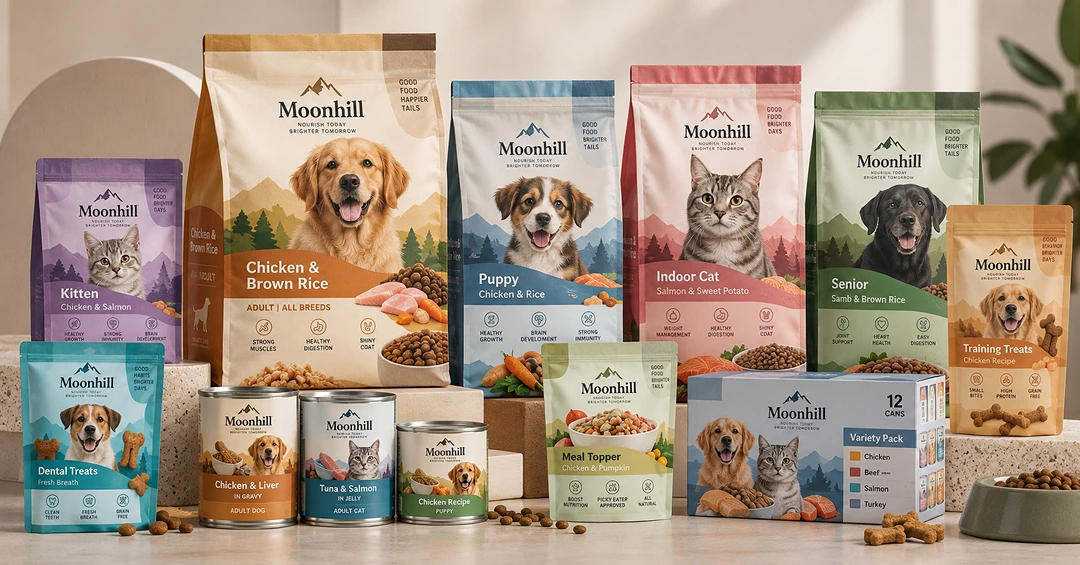
Take something as simple as Chicken and Brown Rice Adult Dog Food. On paper, that's one product. In practice, it can be sold in multiple pack sizes, such as 5 lb, 15 lb, and 30 lb bags, along with different retail or multipack configurations. Introduce a Puppy or Senior variant, or a parallel Salmon recipe, and the product family branches again.
This isn't just about having more artwork to manage. Pet food brands build product families by design, and every branch of that family can create its own packaging requirement. As the portfolio expands, the number of related artworks grows with it.
Pet food packaging carries a significant amount of product communication: species, life stage, recipe, nutritional positioning, functional benefits, feeding instructions, claims, ingredients, and guaranteed analysis. These aren't simply decorative elements. They're part of how each product differentiates itself on the shelf.
So, when a brand moves from Adult to Puppy, or Chicken to Salmon, or Standard to Sensitive Skin and Stomach, the new pack isn't necessarily the old one with a name changed. Product-specific claims, ingredients, nutritional information, and messaging can change too, requiring controlled adaptations across the artwork.
That means portfolio expansion doesn't just create more packaging. It creates more variations of the information that packaging needs to communicate.
Now bring in the physical reality: kibble bags, cans, pouches, and treats. The same broader product portfolio can span multiple packaging formats, and each format typically requires its own artwork adaptation.
This creates another dimension of complexity: product variation multiplied by packaging format and pack size. A new recipe or variant doesn't necessarily result in one new artwork. It can create a set of related artworks that need to remain aligned across the different ways that product is commercialized.
The same product doesn't always reach every customer in the same packaging configuration. Grocery, specialty pet retail, mass retail, club, e-commerce, and direct-to-consumer channels can call for different pack sizes or multipack configurations.
Retail therefore adds another source of variation to an already branching portfolio. The more ways a product is commercialized, the more packaging assets teams need to keep aligned.
This is where the operational challenge becomes more apparent. When all these assets are related, teams need to know which artwork belongs to which product, which formats and sizes exist for it, which versions are current, what's in review, what's approved, what changed, and which related assets may be affected by that change.
The challenge isn't understanding the products. It's keeping track of the relationships between them as the portfolio grows.
A single ingredient update or claims change can affect multiple related SKUs, and tracking those dependencies manually gets harder with every new variant. What began as a manageable collection of artworks can become a connected network of assets that needs more structure to stay aligned.
At this scale, packaging artwork can't be treated as a collection of standalone files. The files are only one part of the picture. Teams also need structure around where each artwork belongs, which version is current, what is being reviewed, what has been approved, and which other assets are connected to it.
That's where artwork management software fits: bringing those assets, relationships, and workflows into a system built to manage packaging at scale.
ManageArtworks gives pet food teams that structure in one place. Products and their related artwork can be organized across variants, formats, and pack sizes, while version control, review and approval workflows, and audit history keep every change traceable.
So when the portfolio changes, teams aren't simply managing another file. They're managing that artwork within the larger product family — with the relationships, versions, and approvals around it kept visible and controlled.
Pet food portfolios will continue to expand. New recipes, life stages, pack sizes, formats, and retail configurations will continue to create more packaging variations.
The challenge, then, isn't simply managing more artwork. It's keeping an expanding network of products, variants, formats, and packaging assets aligned.
A structured packaging artwork management process gives teams a way to connect artwork to the products and variants it represents, control versions and approvals, and trace changes across the portfolio. With that structure in place, teams can spend less time chasing files and checking what changed — and more time moving new products to market with confidence.

Pet food portfolios can span multiple recipes, life stages, pack sizes, formats, and retail configurations, creating a growing number of related packaging artworks to manage.
Packaging artwork management software provides a centralized system for organizing artwork, managing versions and approvals, and keeping relationships between products and packaging assets traceable.
It can help teams organize artwork across product variants, formats, and pack sizes while maintaining version control, approval workflows, and visibility into related assets.

.webp)