Why Cosmetic Labeling is Harder than Pharma





Unlike pharma labels, cosmetic labels don’t have hard-and-fast rules that must be followed. There are guidelines, regional regulations, and general principles, but rarely a single “right” way to structure a label.
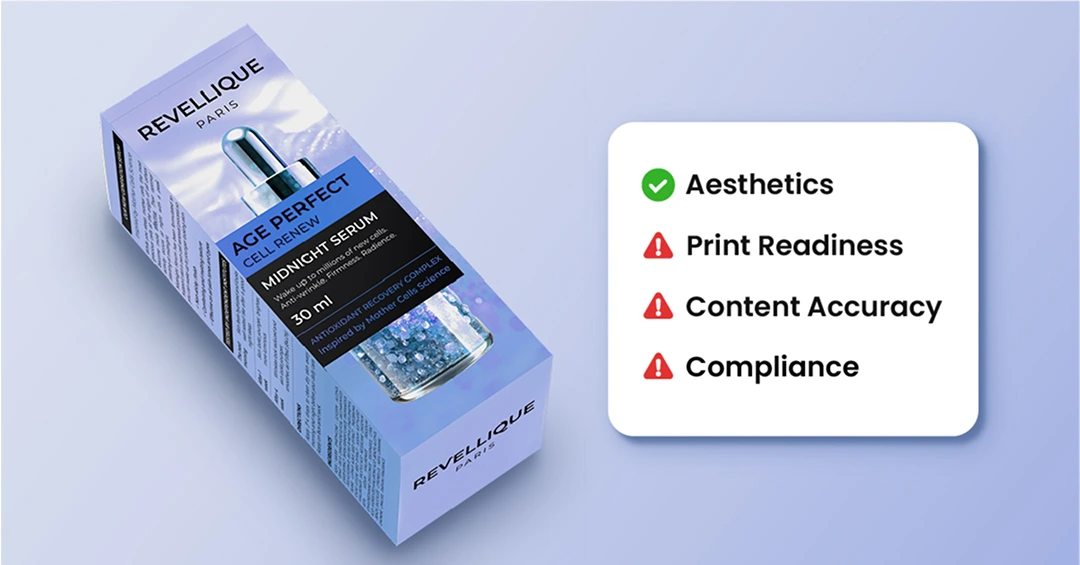
Cosmetic packaging also carries an additional expectation that pharmaceutical labels usually do not: it must work visually as well as regulatory-wise. Claims, ingredient information, warnings, and usage instructions must fit within a design that reflects the brand while still appealing to consumers.
Because of this, labeling decisions are rarely made by one team alone. Regulatory, R&D, design, and marketing often contribute to how the final label takes shape. R&D may focus on scientific accuracy, regulatory teams on compliance, while marketing considers how the packaging aligns with brand positioning or current market trends.
When strict rules are replaced by broader guidelines, and when labeling also needs to support brand presentation, the burden of interpretation falls on the teams reviewing the artwork. Instead of a single clear answer, discussions often revolve around what wording, layout, or presentation is acceptable.
This rarely shows up as a compliance issue. More often, it appears as repeated reviews, multiple artwork versions, and longer discussions around claims, wording, or presentation during the labeling process.
Ambiguity usually enters the labeling process gradually at different stages of the packaging workflow.
In many organizations, teams rely on a combination of experience and informal references to navigate these situations. Previous packaging files are reviewed, earlier approvals are searched in email threads, and colleagues who participated in earlier reviews are consulted.
For example, a team may revisit an older pack to see how a claim like “dermatologically tested” was previously presented, whether any clarifying wording was added, or how similar wording was handled on another product in the same range. Teams often compare multiple past artwork versions to see how a claim evolved, and when the reasoning isn’t obvious, they end up digging through old artwork files or long email threads to piece the decision together.
This approach can work in smaller portfolios or stable teams where people remember earlier decisions. But as product lines expand and more markets become involved, relying on scattered documentation and institutional memory becomes harder.
The missing piece is not regulation knowledge but visibility into earlier decisions.
When the reasoning behind labeling choices exists only in email threads, or individual memory, that knowledge becomes difficult to reuse in future reviews.
Teams often struggle to quickly answer questions such as:
Without that context, teams end up revisiting questions that were already discussed. Even routine packaging updates can take longer simply because the earlier decision history isn’t easy to reference.
Instead of relying on email threads or institutional memory, teams can work within a structured system that brings together artwork files, review conversations, and approval history.
This typically includes capabilities such as:
Together, these capabilities allow labeling decisions to remain visible and traceable across packaging updates. Instead of reconstructing earlier discussions, teams can rely on a connected record of how labeling choices were reviewed and approved.
ManageArtworks brings these capabilities together in a single artwork management platform, helping cosmetic teams review packaging updates with greater clarity, continuity, and confidence.

.webp)