FSSAI Proposes Front-of-Pack Warning Labels: What Food Brands Need to Know





India could be moving towards a major change in the way nutrition information appears on packaged food and beverage products.
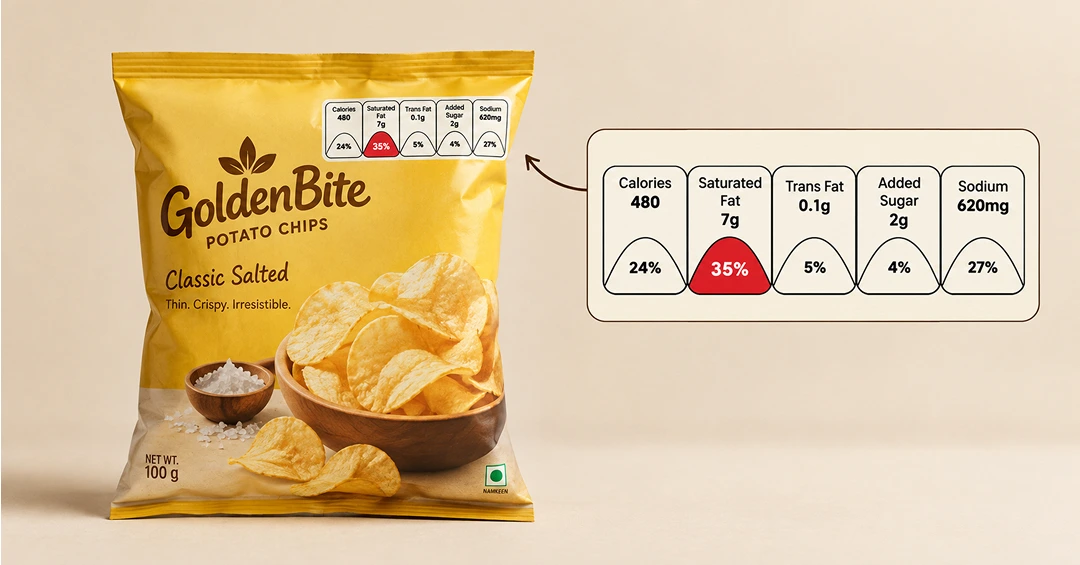
The Food Safety and Standards Authority of India (FSSAI) has proposed a front-of-pack warning-label system that would require prominent red warnings on products high in saturated fat, sugar or salt. The proposed labels would use red hexagonal symbols carrying declarations such as “HIGH FAT,” “HIGH SUGAR,” “HIGH SALT” and “HIGHLY SWEETENED BEVERAGE.”
The proposal emerged in a Supreme Court filing amid growing public and legal pressure for stronger front-of-pack nutrition warnings.
While the proposal is not yet a final requirement and the exact implementation path remains to be seen, it is a development food and beverage brands in India will want to keep a close eye on. If adopted, the impact could extend well beyond a new symbol on the front of a pack.
Under the proposed system, packaged foods and beverages that meet specified thresholds for saturated fat, sugar or salt could be required to carry a prominent red warning on the front of the package.
That is what makes this proposal particularly significant. Unlike nutrition information that consumers may need to find and interpret on the back of a pack, these warnings are designed to be immediately visible.
The proposed declarations would tell consumers, at a glance, when a product is high in a particular nutrient of concern. A separate warning for highly sweetened beverages has also been proposed.
However, the proposal is still subject to further developments. Questions around the final requirements including the precise thresholds, scope and implementation details will ultimately determine which products are affected and how brands will need to respond.
For consumers, the proposed labels are intended to make certain nutrition information harder to miss. For brands, they could potentially change the front of the pack itself.
The principal display panel is some of the most valuable real estate on any food or beverage package. It is where brands communicate identity, product benefits, claims and other information designed to influence a purchase decision. Adding a prominent, standardised warning to that space could have implications for packaging design, content hierarchy and artwork across affected products.
And the impact will not stop with a single pack.
A large FMCG portfolio can include numerous products, pack sizes, formats and artwork variations. If a final requirement applies across multiple products, what begins as a regulatory change could eventually become a significant packaging update spanning hundreds or even thousands of artworks.
That is why the eventual challenge for many organisations may not simply be how to add a red warning label. It will be understanding where the change applies and then managing its journey through the packaging process.
A regulatory requirement does not arrive at the printer as finished artwork.
Once the final requirements are in place, brands need to translate them into packaging changes across every affected product. That can mean determining which packs are impacted, updating artwork across different SKUs and formats, and moving those changes through design, review, approval and production.
The complexity grows with the size of the portfolio. Different products can have multiple pack sizes, artwork variations and approval histories, making it critical to keep track of what needs to change and ensure the right version of every pack moves forward.
That is where a centralised packaging and artwork management system can help. ManageArtworks brings packaging information, artwork and workflows into one place, giving teams greater visibility and control as changes move from update to review, approval and production.
When a single regulatory development has the potential to affect a broad portfolio, managing the change is about more than adding a new warning to the pack. It is about ensuring that every affected artwork is identified, updated and taken through the process accurately.
FSSAI's proposal is not yet the final word on front-of-pack warning labels in India. Further developments will determine the final shape of the requirement, including which products are covered and what brands will ultimately need to put on pack.
But the proposal already raises an important question for packaging teams: if a change like this were finalised tomorrow, how quickly could you tell what across your portfolio needs to change?
For brands managing hundreds of SKUs, that answer depends on more than having the right people in place. It depends on having a clear view of the artwork already out there—and a way to manage change when it comes.
That is the value of a centralised artwork management system. Not because every regulatory proposal will become a portfolio-wide packaging overhaul, but because when change does arrive, you don't want the first step to be figuring out where everything is.

FSSAI has proposed a system of prominent red warnings for packaged foods and beverages that are high in saturated fat, sugar or salt. The proposed warnings include declarations such as “HIGH FAT,” “HIGH SUGAR” and “HIGH SALT.”
If finalised, the requirements could affect multiple products, SKUs, pack sizes and artwork variations. Brands may need to identify every affected pack and manage packaging updates across their portfolio.
A centralised artwork management system can help teams organise packaging information, identify affected artworks and manage changes through design, review, approval and production with greater visibility and control.

.webp)